“The United States has now been at war for almost two decades. Initiated in Afghanistan in response to the terrorist attacks of September 11, 2001, and extending to Iraq and the greater Middle East, the war, sometimes framed as a single “global war on terror” and sometimes as a series of discrete military campaigns, has left hundreds of thousands dead and hundreds of thousands more maimed, displaced, diseased, and traumatized. Marred by military atrocities, torture scandals, fiscal waste, toxic exposure, popular opposition, and public disgust, the U.S. invasion of Iraq induced a regional death spiral and inspired new terrorist networks of the kind that the war was ostensibly fought to vanquish. Even as the active U.S. military presence has decreased, there have been repeated calls to return to large-scale U.S. combat forces to the region and renewed panic about “Islamic” terrorist infiltration of the U.S. “homeland.” The longest U.S. war to date, this conflict has taken on an aura of permanence that is extraordinary by any measure.”
On Thursday, a team of scientists offered a detailed accounting of how marine life was wiped out during the Permian-Triassic mass extinction. Global warming robbed the oceans of oxygen, they say, putting many species under so much stress that they died off.
And we may be repeating the process, the scientists warn. If so, then climate change is “solidly in the category of a catastrophic extinction event,” said Curtis Deutsch, an earth scientist at the University of Washington and co-author of the new study, published in the journal Science.
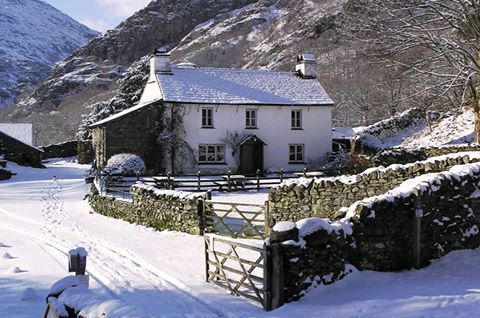
Beatrix Potter’s Yew Tree Farm, Coniston, Cumbria, England.
Yew Tree was owned by Beatrix Potter in the 1930s and is still home to many of her furnishings.
In 1929, when Beatrix Potter was 64 years old, the Monk Coniston estate came up for sale. The estate included 2500 acres of land around the head of Coniston Water.
It consisted of the well-known beauty spot Tarn Hows, seven farms including Yew Tree, Boon Crag, High Arnside, High Tilberthwaite and High Yewdale, as well as cottages, quarries and open fell land. She later sold the half containing Tarn Hows to the National Trust, and bequeathed the rest of the estate to the Trust in her will.
Yew Tree is still a working farm and is home to a special little flock of Herdwick sheep- a breed Beatrice help save together with her shepherd Tom Storey. Beatrix bred Herdwick sheep on her farms in the Lake District, which at that time were a threatened native breed.
Yew Tree Farm featured as ‘Hill Top’ in the film ‘Miss Potter’ starring Rene Zellweger.